18 Oct 2026
Rickshaw and Qingqi Drivers: How to Manage Daily Fuel Cost and Income
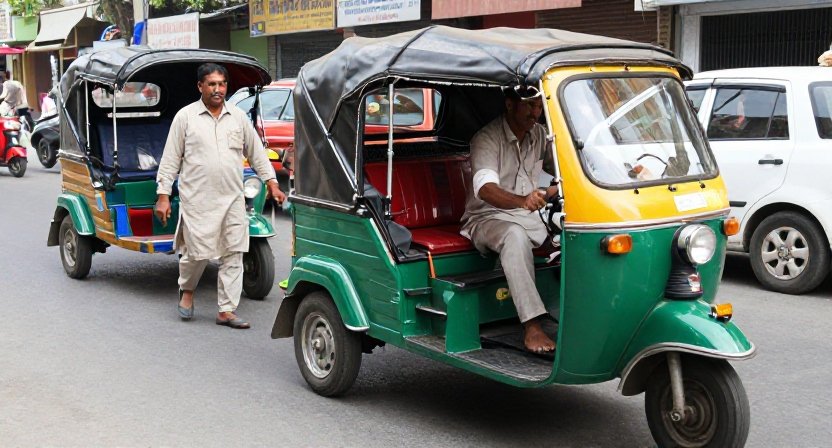
If you earn your living from a rickshaw, a Qingqi or a similar vehicle, fuel is probably your biggest daily cost, and its price changes without warning. Many drivers count what they take home at the end of the day without knowing how much of it belongs to the tank. A few minutes of simple record keeping can show you your real income and help you make better decisions about when and where to work.
Know your fuel cost per kilometre
Divide the price of fuel by the kilometres you get from a litre. If petrol costs Rs 400 per litre and your rickshaw gives 28 km per litre, your fuel costs 400 / 28 = about Rs 14.3 for each kilometre driven. These are example numbers, so use today's price from our price table and your own measured mileage. This figure is the one to keep in mind, because every kilometre you drive costs at least this much before you earn anything.
Work out the daily fuel bill
Suppose you drive 120 km in a day. At Rs 14.3 per kilometre your fuel costs about Rs 1,716. If you drive 150 km, it is about Rs 2,145. Note that not all of those kilometres carry passengers. Time spent searching for a fare, driving to a stand or returning empty also burns fuel, so the real earning distance is smaller than the distance on the meter.
Calculate your true daily income
The formula is simple:
True income = total fares collected, minus fuel, minus other daily costs.
Other daily costs include any daily rent or payment to the vehicle's owner, parking or stand fees, meals and a share of maintenance and repairs. Suppose your fares for a day come to Rs 4,500, fuel is Rs 1,716, rent is Rs 800 and you set aside Rs 300 for maintenance. Your true income for the day is 4,500 - 1,716 - 800 - 300 = Rs 1,684. This is the number that pays for your household.
Set aside money for maintenance
Oil changes, tyres, a chain or belt, brakes and sudden repairs always come. A driver who sets aside a fixed amount every day does not face a crisis when a part fails. Treat this money as a cost of the day, like fuel, and not as spare cash.
Find your break-even point
The break-even is the amount you must collect before you earn anything for yourself. In the example above, fuel, rent and maintenance come to 1,716 + 800 + 300 = Rs 2,816. Any fares above that are your income. If you are at Rs 2,500 in the early evening, you know that the next few fares matter a lot, and that a slow evening with long empty drives may not be worth the fuel.
Reduce empty running
Empty kilometres are the biggest avoidable waste. A few ways to cut them:
- Learn the busiest places and times in your area, such as markets, hospitals, schools and bus stops, and wait there instead of cruising.
- Turn the engine off while waiting in a queue.
- Choose a return route where you can pick up a fare, not the quickest empty route.
- Avoid areas where you are likely to get stuck in traffic for long periods.
Save fuel through the vehicle
The same habits that help cars and motorcycles help three-wheelers: correct tyre pressure, a clean air filter, a properly adjusted chain or drive and regular service. Smooth starts and avoiding sudden braking help too. Worn parts and neglected tuning can reduce mileage a great deal, and a rickshaw that gives 24 km per litre in place of 28 uses about 17 per cent more fuel. Over 3,000 km a month that is roughly 18 extra litres, which is about Rs 7,200 at Rs 400 per litre. Our guide to tyre pressure and fuel economy explains one easy check, and our guide to maintenance habits covers servicing.
Keep a simple daily record
You do not need a computer. A notebook with one line per day is enough. Write the date, the kilometres on the meter at the start and end, the litres you bought and what you paid, your total fares, and your other costs. At the end of the week add up the columns. Over a month you will see which days earn most, how your mileage is changing, and how a price change affects your income. Our guide to keeping a fuel expense log shows a format that you can use.
Prepare for price changes
When the price rises, your break-even rises with it. Use the numbers to decide whether to change your hours, the areas you work or the fares you charge where you are allowed to. When you drive 3,000 km a month, a Rs 10 rise in the price per litre costs you about Rs 1,070 a month at 28 km per litre. Our fuel calculator will compute the effect of a price change on your trip costs in seconds.
Frequently asked questions
Is it worth working on days when fares are low? Compare your expected fares with your break-even. If you only cover fuel and rent, the day gives you little, but staying at home still leaves your rent due, so a partial day may be better than none. Your records will show your own pattern.
How can I tell if my vehicle is wasting fuel? Track kilometres per litre. A drop of more than a couple of kilometres per litre over several tanks suggests it needs a check.
If you are interested in the relief scheme, check eligibility and registration through official channels and read our relief scheme page. For a wider understanding of why the price changes, see our guide to fuel prices in Pakistan. Your vehicle is a small business. Treating it like one, with a clear view of costs and income, is the surest way to protect what you earn.
Related articles
18 Oct 2026
Why Petrol Prices in Pakistan Fall More Slowly Than Oil Prices
Crude oil can drop quickly while the pump price barely moves. Here are the real reasons: timing, stock, exchange rates, taxes and fixed costs.
18 Oct 2026
What Is the Petroleum Levy and How Does It Affect Your Fuel Price?
The petroleum levy is one of the biggest parts of a litre of petrol. Learn what it is, why governments use it and how a change shows up at the pump.
18 Oct 2026
How the Exchange Rate Affects Fuel Prices in Pakistan
Oil is bought in dollars and sold in rupees. See, with simple worked examples, why a weaker rupee can raise your petrol price even when oil gets cheaper.
18 Oct 2026
12 Fuel-Efficient Driving Habits That Save Petrol in a Car
Twelve practical habits, from smooth acceleration to sensible speed, that can lower your petrol use without buying anything.