18 Oct 2026
Car Maintenance Habits That Improve Mileage: What to Check and When
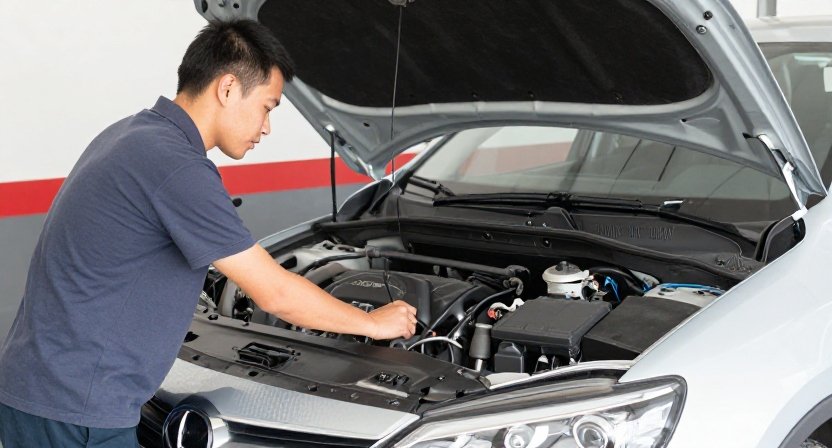
A car that is poorly maintained uses more fuel than one in good condition, and the gap grows as problems accumulate. Many of the worst fuel wasters are cheap to fix. This guide lists the jobs that matter most for mileage, explains why, and offers a simple schedule. Always follow the service schedule in your car's owner's manual, because intervals vary between models and conditions.
Engine oil
Oil reduces friction inside the engine. Old oil gets thick and dirty and creates more friction, so the engine works harder. Use the grade of oil that the manufacturer recommends and change it on time. In very dusty or hot conditions, or with a lot of short trips and heavy traffic, you may need to change it sooner. Use a good-quality oil and filter, and avoid cheap oil of doubtful origin.
Air filter
The engine needs a steady supply of clean air. A clogged filter restricts airflow, and on many engines it makes the mixture richer than intended and hurts mileage and performance. In dusty areas, filters clog fast. Check the filter at each service and replace it when it is dirty. It is one of the cheapest and quickest jobs.
Spark plugs and ignition
Worn or fouled spark plugs cause incomplete burning of the fuel. The signs are rough idling, hard starting, hesitation and poor mileage. Replace them at the interval in the manual, and use the type that the manufacturer specifies. Faulty ignition leads or coils have similar effects.
Tyres and alignment
Under-inflated tyres waste fuel, as we explain in tyre pressure and fuel economy. Wheel alignment matters as well. If the wheels are not pointing straight ahead, the tyres scrub against the road, which creates drag and uneven wear. Signs of misalignment include the car pulling to one side, a crooked steering wheel and uneven tyre wear. Have the alignment checked after hitting a large pothole or kerb, and when you replace tyres.
Brakes
A brake that does not fully release, usually from a seized caliper or sticking pad, drags constantly. After a drive, if one wheel is much hotter than the others or there is a burning smell, have it inspected. It is a safety issue as well as a fuel issue.
Oxygen sensor and fuel system
Modern petrol engines use sensors to control the mix of air and fuel. A failed oxygen sensor can send the wrong information and increase fuel use, and the warning light on the dashboard may come on. Do not ignore a lit warning light. Have the fault code read at a workshop. Dirty fuel injectors or a blocked fuel filter can also cause poor running, so use fuel from busy, reputable stations to reduce contamination.
Cooling system
An engine that runs too cool or too hot is inefficient. A thermostat stuck open stops the engine reaching its working temperature, and a poor coolant level or a faulty fan can cause overheating, which is dangerous for the engine. Check the coolant level regularly when the engine is cold.
Transmission and clutch
In a manual car a slipping clutch wastes power, and in an automatic, low or old transmission fluid can cause poor shifting. Follow the manual for fluid checks and changes, and report any slipping or rough shifting early.
A simple schedule
The intervals below are common examples, not rules for every car. Use your manual for the correct numbers.
- Every month: tyre pressure including the spare, and a look at fluid levels such as oil and coolant.
- Every few months or at each service: air filter check, tyre condition and rotation.
- Every 5,000 to 10,000 km, or as the manual says: engine oil and oil filter.
- Every 20,000 to 40,000 km, or as the manual says: spark plugs, fuel filter and brake inspection.
- Whenever a warning light appears: have it diagnosed.
Do not over-service either
More work is not always better. Some workshops suggest costly additives, engine flushes or extra services that the manual does not call for. Ask why a job is needed and what the manual says. We cover popular claims in our article on petrol-saving myths that do not work.
Measure the result
The best proof of a good service is your mileage. Record your average before and after in a fuel log. If a car averaging 11 km per litre returns to 12 after a service, then 1,000 km a month needs about 7.6 litres less, roughly Rs 3,000 at an illustrative Rs 400 per litre. The service has paid for itself within a few months.
Frequently asked questions
Can a dirty air filter really change mileage? On many engines, yes, particularly in dusty conditions, and it can also reduce power.
Do old cars always use more fuel? Not necessarily. A well-maintained older car can be efficient, and a neglected newer one can be poor.
Warning signs of a car that is wasting fuel
Pay attention to the following signs, since each one can mean that a small problem is costing you money every week:
- Mileage that has slipped by more than a kilometre or two per litre without a change in how you drive.
- A rough or unsteady idle, hesitation when accelerating or the engine stalling at junctions.
- Black smoke from the exhaust, or a strong smell of unburnt fuel.
- The car pulling to one side, or a steering wheel that is off-centre when driving straight.
- A dashboard warning light, particularly the engine management light.
- A burning smell or one very hot wheel after a drive.
Do not wait for these to get worse. A quick check at a trusted workshop usually costs less than the extra fuel you would burn.
Combine good maintenance with efficient habits, which we describe in fuel-efficient driving habits, and check the effect of price changes on your budget with our fuel calculator and the price table.
Related articles
18 Oct 2026
Why Petrol Prices in Pakistan Fall More Slowly Than Oil Prices
Crude oil can drop quickly while the pump price barely moves. Here are the real reasons: timing, stock, exchange rates, taxes and fixed costs.
18 Oct 2026
What Is the Petroleum Levy and How Does It Affect Your Fuel Price?
The petroleum levy is one of the biggest parts of a litre of petrol. Learn what it is, why governments use it and how a change shows up at the pump.
18 Oct 2026
How the Exchange Rate Affects Fuel Prices in Pakistan
Oil is bought in dollars and sold in rupees. See, with simple worked examples, why a weaker rupee can raise your petrol price even when oil gets cheaper.
18 Oct 2026
12 Fuel-Efficient Driving Habits That Save Petrol in a Car
Twelve practical habits, from smooth acceleration to sensible speed, that can lower your petrol use without buying anything.